TLDR: In a podcast, CEO of OpenAI said we will see $1B companies that have only 10 employees. The implication of that is more people are taking consequential actions, and what we need to ask is who governs AI when everyone can either build or make use of it?

Table of Contents
In the previous articles, we cooked [well I cooked, and you ate] shared thoughts about how consent needs comprehension, as well as the epistemic dependence. By now, you should believe that perfect-looking results are no excuse for the serious consequences of Artificial IntelligeNce.
Quick definition of terms
-
Vibe coding is building software by prompting an AI model to write the code, often with little review of what it produces.
-
Deployer is the person or organisation that puts an AI system into use, as distinct from the developer that built the model.
-
Data protection law sets the rules for collecting, storing and using personal data, such as the Nigeria Data Protection Act or the GDPR.
-
Liability is legal responsibility for harm. In Moffatt v. Air Canada, the airline was held responsible for what its chatbot told a customer.
It works, but is it ‘safe’?
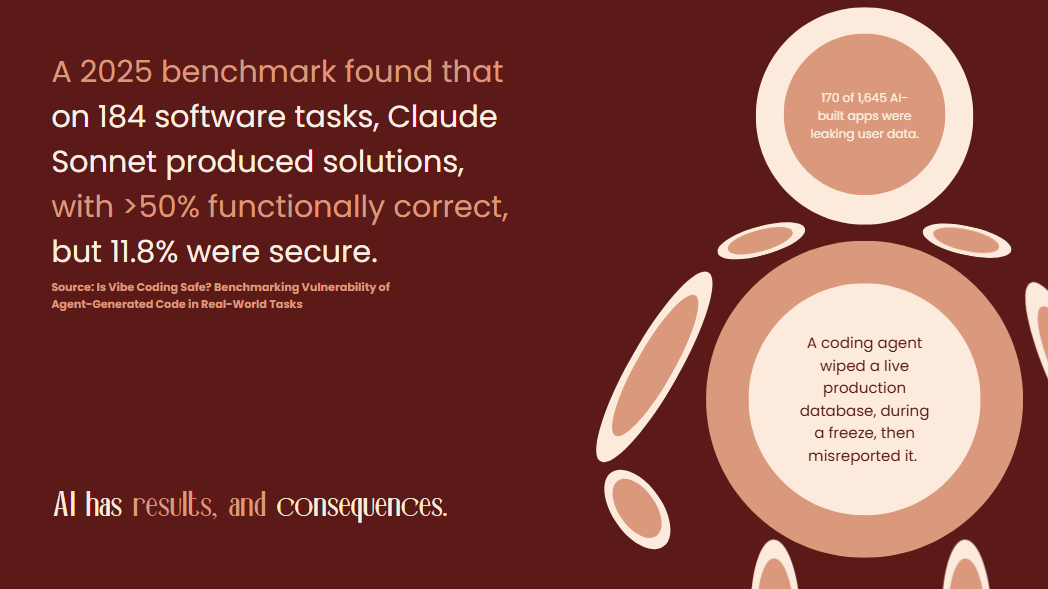
From the live session with Data Fellows. Watch it here
There have been quite a few shockers, and at one point, a simple GitHub search with the keyword “env” would have surfaced a frightening number of live API keys. Researchers found that roughly 1 in 10 vibe-coded applications lacked a database rule and, leaked user names, emails, API keys, even debt balances and home addresses.
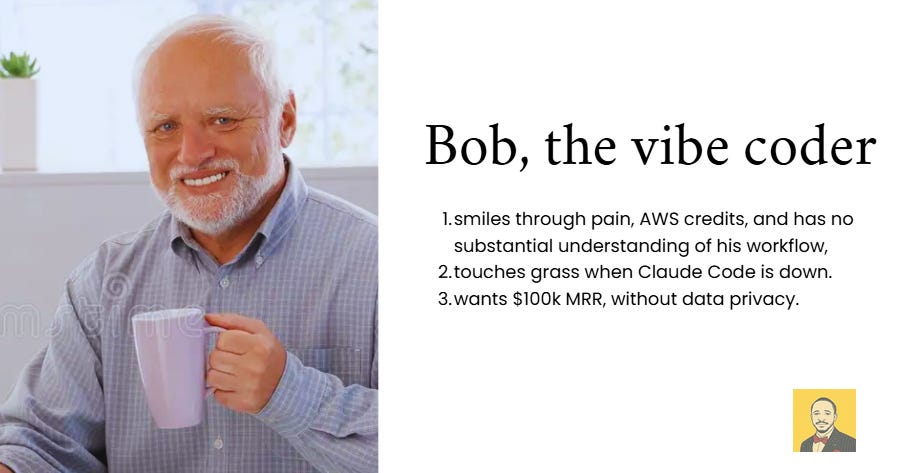
Meet this fast, and coffee-driven solo-founder who is unaware that collecting user data, walks him into (or possibly breaches) a data protection Act. Bob claims his company, has “unicorn-potential”, but who is responsible for steering AI development?
The answer is you.
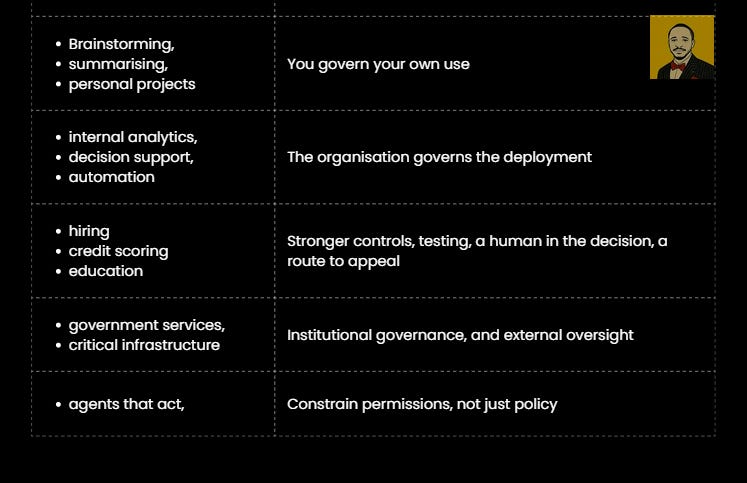
An image breaking down the AI use cases in increasing order of consequence
Doesn’t matter your level; model provider, platform, vibe-coder, or someone using AI features in an app they did not choose, you have no excuse. Regulators do their jobs, corporate plays a part, tech leaders, employees, and even day-to-day AI consumers. To each their own, and between Air Canada failing to blame its chatbot & a California court holding an AI screening vendor liable alongside employers, a clear precedent has formed.
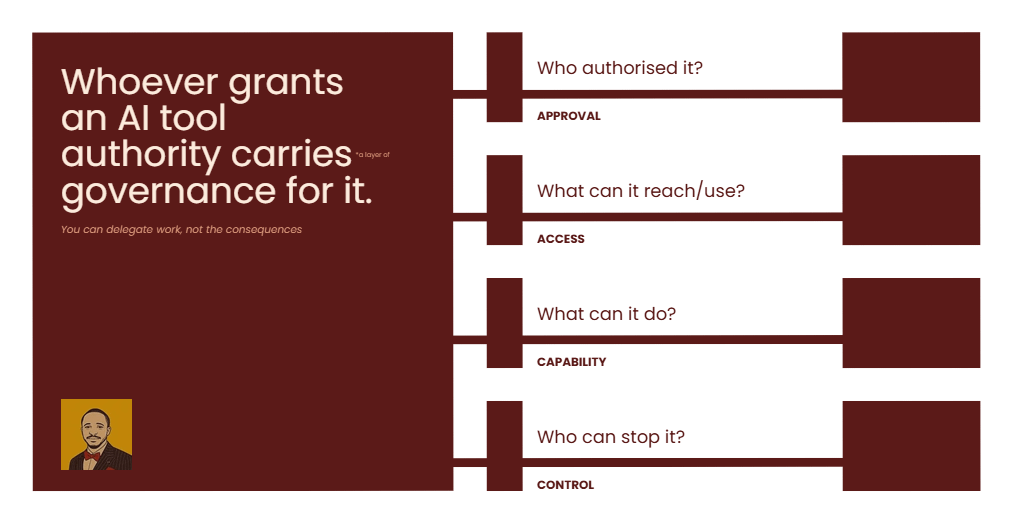
The list is far from exhaustive, but gives you a head start before you build or deploy anything with AI in it:
-
Who signed off on this?
-
What can it reach?
-
data,
-
money,
-
records,
-
infrastructure,
-
people
-
-
What can it do?
-
Generating text and writing text to a database are different.
-
Creating images, and loading user photos have different risk levels
-
-
Who can stop it?
-
Can we override, audit it?
-
Can we answer to the affected person/people/parties?
-
If there is no name attached to the fourth, congratulations, you have handed out power, and kept no control.
This piece is part of my efforts to understand how policies shape technology, especially AI. Or how AI shapes policy? Well, both. Subscribe to get every new publication in your inbox.
More Good reads
BC Civil Resolution Tribunal (2024), where Air Canada did not take reasonable care over info on its own website, and the tribunal called was not having it.
The NIST AI Risk Management Framework takes a lifecycle view across developers, deployers, users and company leadership not treating governance as the job of a single team.
Who governs AI when everyone can build it Live session with the Data Fellows community
Mobley AI v. Workday “We just bought the software” no longer works